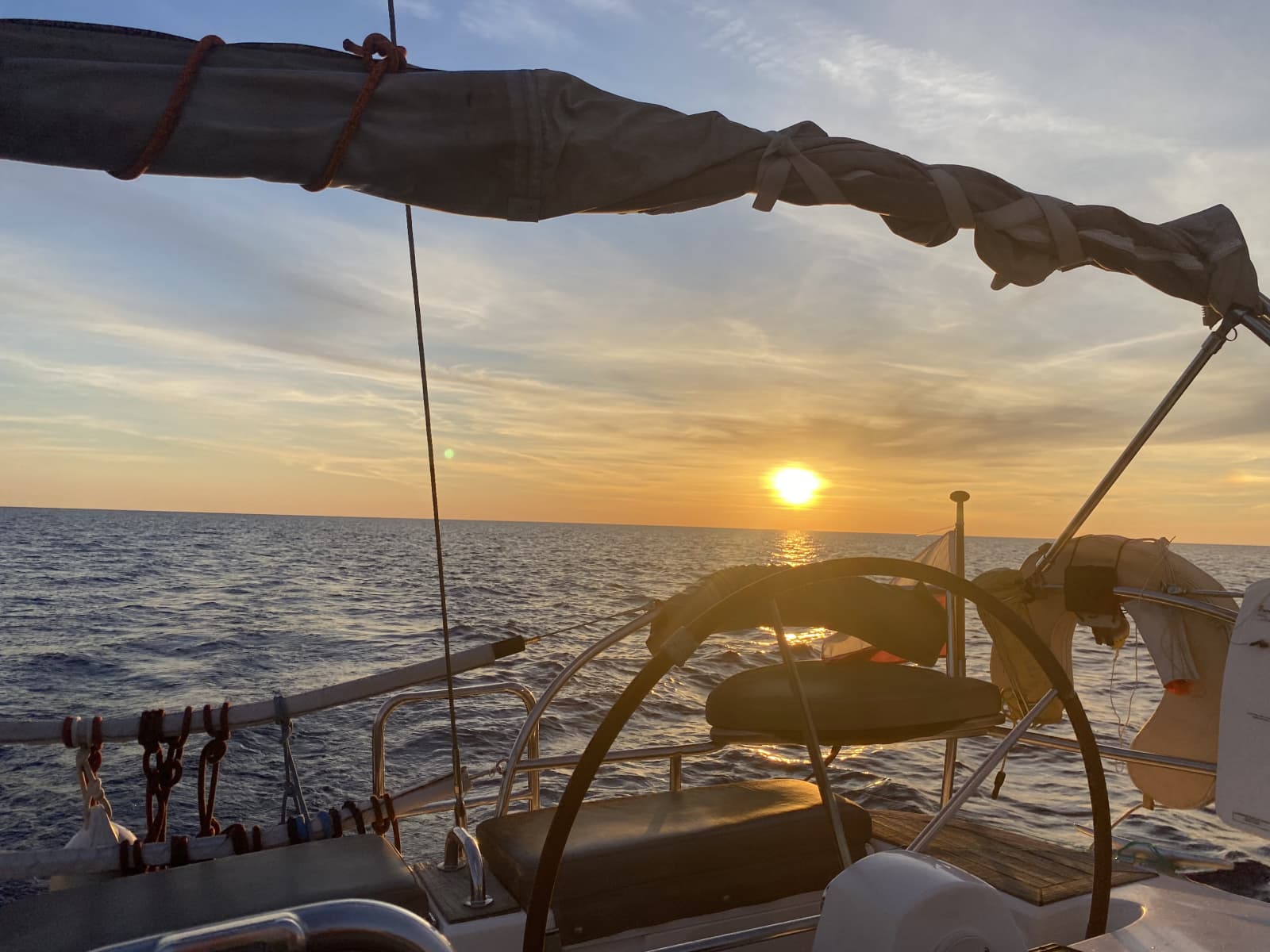
WHERE TO SAIL IN SPAIN
Alicante or the Canaries: two very different kinds of sailing
Both are in Spain and both have sun in winter. On the water they have little in common. Alicante is Mediterranean coastal sailing: sea breezes, flat mornings, a harbour every few miles. The Canaries are Atlantic island sailing: trade winds, ocean swell and open channels. Which is better depends on the sailing you want.
SHORT ANSWER
Choose the water that matches the sailing you want to do.
Last reviewed:
Alicante suits first weeks aboard, handling practice and relaxed coastal sailing: lighter mornings, a regular afternoon breeze, modest seas and many harbours close together.
The Canary Islands suit sailors who want strong, steady wind and ocean conditions: trade winds, swell and longer open-water legs between islands.
For warmth in mid-winter the Canaries win on temperature. From April to early November Alicante is warm, the water is swimmable for most of that time, and the trip is shorter.
Wind
On the Costa Blanca the summer pattern is a thermal sea breeze. Mornings are often light. As the land heats up the breeze fills in from the east or south-east, commonly ten to eighteen knots by mid-afternoon, and fades in the evening. In winter the weather is driven by passing systems instead: a few days of fresh westerlies or a spell of easterly wind, with long calm, clear periods between them.
The Canaries sit in the north-east trade winds. In summer they blow almost every day, often at fifteen to twenty-five knots. The high islands bend and squeeze the flow, creating acceleration zones in the channels and at the corners of the islands where the wind can rise by ten knots or more within a few boat lengths, and calm patches in the lee. In winter the trades are less constant and Atlantic lows sometimes bring wind from the south or west.
Sea state and tides
The bay of Alicante has almost no tide and no tidal stream to plan around. Waves are the short Mediterranean kind and are usually modest in the sailing season, though an easterly blow sends a swell into the bay for a day or two.
In the Canaries you sail on the open Atlantic. A long ocean swell is present most days, the channels between islands can be rough when the trades are up, and the tidal range is around two metres, which matters in harbours and anchorages. It is impressive sailing, and it asks more of the stomach in the first days.
Temperatures, season by season
Check the climate tables from AEMET, the Spanish state weather agency, for exact figures. The broad picture is this.
KEY POINTS
- Spring: Alicante has daytime temperatures in the low twenties and a cool sea that warms through May and June. The Canaries are a little warmer in the air, with the sea around nineteen to twenty degrees.
- Summer: Alicante is hot, around thirty degrees by day, with the sea in the mid-twenties. The Canaries are a few degrees cooler in the air, with the strongest trade winds of the year.
- Autumn: Alicante stays warm into October and the sea holds its heat; this is also when the occasional heavy thunderstorm arrives. The Canaries are at their calmest and their marinas at their busiest, as boats gather to cross the Atlantic.
- Winter: Alicante has bright days around sixteen to eighteen degrees, cold nights and a sea near fourteen or fifteen degrees. The Canaries stay around twenty degrees by day, with the sea near nineteen.
Getting there
Alicante-Elche airport is one of the busiest in Spain, with direct flights from much of Europe, typically two to three hours from the UK, Ireland, Germany, the Netherlands and Scandinavia. The marina is in the city centre, about twenty minutes from the terminal by taxi, and Madrid is around two and a half hours away by high-speed train.
The Canaries are roughly four to four and a half hours from northern Europe. Once there, distances between islands are larger than they look: the channels are fifteen to sixty miles of open water, so an island-hopping week is shaped by the wind direction.
The kind of sailing each gives you
From Alicante a typical day is a few hours of sailing, lunch at anchor and a harbour or the home berth by evening. Cabo de las Huertas, the island of Tabarca and Santa Pola are all within a day’s sail, with El Campello, Villajoyosa and Altea to the north-east. The sea breeze gives flat-water practice in the morning and a proper sailing breeze after lunch, which is why this coast works so well for first weeks and for handling practice. Longer passages are there when you want them: the Balearics are an overnight sail away.
In the Canaries the sailing is bigger from the first day: reefed sails, ocean swell and passages where the next island is the only shelter. It suits crews who want heavy-weather experience and long legs, and people preparing for an ocean crossing.
Where we sail
Costa Blanca Sailing sails from Marina Alicante all year, on an Elan 434 Impression with three double guest cabins and a small group of up to five. Stays run from two days to two weeks, from €549 per person for Try Sailing: Two Days Aboard. As anywhere, the route, any landing and any night sailing depend on the weather and the yacht’s limits.
Common questions
SOURCES
Public sources for the facts on this page, so you can check the detail for your own plans.
THINKING ABOUT ALICANTE?
Tell us the month and the kind of sailing you have in mind.
We sail from Marina Alicante all year. Send your dates and what you want from the trip, and we will tell you what the conditions are usually like and which stay fits.